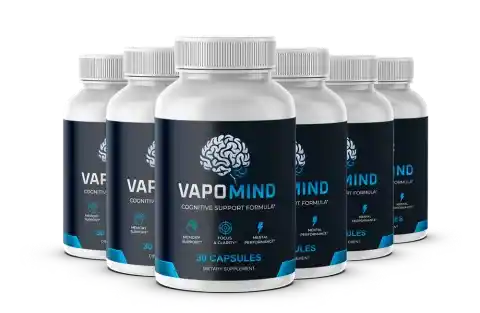
Most people who search for a cognitive support supplement are looking for one of a short list of things: better memory, clearer thinking, the ability to focus without caffeine, or longer mental stamina through a demanding day. VapoMind addresses all of these — not through stimulant activation, but through a formula that supports the biological systems underlying real cognitive performance.
This guide covers all six core vapomind benefits in detail, explaining the ingredient science behind each one and why this multi-pathway approach produces results that build gradually and last — rather than peaking for a few hours and then crashing.
What You Will Find Here
Benefit 1: Sharper Memory Recall
Memory difficulty is the single most common cognitive complaint people bring to their doctors as they get older — and it is one of the four primary targets of the vapomind formula. Two ingredients work in tandem to address it at both the structural and functional level.
Bacopa Monnieri and the Synapse Connection
Bacopa Monnieri is an Ayurvedic adaptogen with some of the longest-standing research in cognitive science. Its active compounds, called bacosides, have been studied for their role in repairing and protecting the synaptic dendrites — the branching ends of neurons that transmit signals between cells. When synapse function deteriorates, memory retrieval becomes unreliable. Bacopa's bacosides appear to support the maintenance and rebuilding of these synaptic structures.
The National Center for Complementary and Integrative Health notes that Bacopa Monnieri has been used in traditional Ayurvedic medicine for centuries to support memory and mental function, with modern research now investigating the mechanisms behind these effects.
Phosphatidylserine and Cell-Membrane Health
Phosphatidylserine is a phospholipid that makes up a significant portion of brain cell membranes. Its concentration in neural tissue is highest in the inner leaflet of the cell membrane, where it plays a direct role in facilitating neurotransmitter release and receptor sensitivity. As phosphatidylserine levels naturally decline with age, so does the speed and reliability of the synaptic signals underlying memory retrieval.
Supplemental phosphatidylserine replaces what the body no longer produces in sufficient quantities — supporting cleaner neurotransmitter release and, consequently, more reliable access to stored memories. Studies have examined its role in reducing word-finding errors and improving delayed recall in older adults.
Memory Timeline: Bacopa Monnieri's memory benefits are gradual — they build over weeks of consistent use as the formula supports synaptic maintenance. Most users report noticeable memory improvements around weeks 6–8. This is not a short-term effect but a structural one.
Benefit 2: Sustained Focus Without Stimulants
Caffeine-based focus supplements work by blocking adenosine receptors — temporarily preventing the feeling of fatigue. The problem is that this approach causes tolerance, disrupts sleep architecture, and produces the familiar afternoon crash when the effect wears off. Vapomind takes a fundamentally different approach to focus.
Alpha-GPC and Acetylcholine Synthesis
Alpha-glycerylphosphorylcholine (Alpha-GPC) is one of the most bioavailable choline compounds available. Choline is the direct precursor to acetylcholine — the brain's primary neurotransmitter for attention, learning, and memory encoding. Unlike dietary sources of choline (eggs, liver), Alpha-GPC crosses the blood-brain barrier efficiently, delivering usable choline directly to neurons where it can be converted into acetylcholine.
Higher acetylcholine availability supports the attentional networks that govern sustained, directed focus — the kind needed for deep work, complex problem-solving, or long reading sessions. This focus is neurochemical, not stimulant-driven, so there is no tolerance curve and no crash.
Ginkgo Biloba and Cerebral Blood Flow
Focus also requires adequate delivery of oxygen and glucose to active neural circuits. Ginkgo Biloba supports this through its ability to relax blood vessel walls and support healthy microcirculation in the brain. Improved cerebral blood flow means neurons have the substrate they need to maintain output — particularly relevant during the afternoon hours when blood flow to the brain naturally ebbs.
No Tolerance, No Crash: Because VapoMind's focus benefits are driven by neurotransmitter support and circulation — not stimulant receptor activation — they do not diminish with daily use the way caffeine-based supplements do.
Benefit 3: Mental Clarity and Faster Word Retrieval
Mental clarity — the subjective experience of thoughts coming clearly and quickly — is one of the vapomind benefits most frequently mentioned in customer accounts. It shows up as fewer tip-of-the-tongue moments, faster sentence completion, and the feeling that the mental channel is unobstructed.
What Drives Word-Retrieval Difficulty
Word-finding difficulty occurs when the neural pathways connecting a concept (stored as a memory trace) to its verbal label (the word or name) are slow or disrupted. This is not usually a memory storage problem — the memory is there; the access pathway is slow. The causes are typically reduced acetylcholine availability and degraded cell-membrane signaling.
How VapoMind Addresses This
Alpha-GPC directly addresses acetylcholine availability — the neurotransmitter most involved in the retrieval of verbal memories. Phosphatidylserine supports the cellular membrane structures through which neurotransmitters are released and received. When both are working at optimal levels, the access pathway to verbal memories becomes more reliable and faster. This is why verbal fluency is one of the most commonly reported improvements among people who have used vapo mind consistently for 6–8 weeks.
Research into phosphatidylserine has specifically examined verbal fluency and recall outcomes, finding benefits in studies on age-related memory decline — reviewed through resources including the Alzheimer's Association Brain Health resource.
Benefit 4: Clean Cognitive Energy — No Stimulants Required
Cognitive energy — the mental resource that depletes through sustained thinking — is a real phenomenon with measurable neurological underpinnings. VapoMind's approach to supporting it is fundamentally different from anything caffeine-based.
Glucose, Oxygen, and Neural Efficiency
The brain uses glucose as its primary fuel and oxygen to process it. Cognitive fatigue is often linked not to depletion of stored energy, but to reduced delivery of these resources to active neural circuits — a circulation and efficiency problem rather than a storage problem. Ginkgo Biloba directly addresses this by supporting healthy cerebral microcirculation.
Neural Efficiency vs. Stimulant Activation
Stimulants like caffeine create the sensation of energy by blocking fatigue signals — not by actually improving the brain's energy production or delivery. VapoMind takes the opposite approach: supporting the delivery and utilization of the brain's actual fuel sources, and optimizing the efficiency of neural signaling through healthy neurotransmitter levels.
The result is a different quality of cognitive energy — steadier, cleaner, and not followed by the withdrawal-like fatigue that caffeine produces when its effects wear off. The National Institute on Aging offers context on how maintaining healthy cerebral circulation supports cognitive energy as we age.
Benefit 5: Long-Term Neuroprotection
The neuroprotective benefits of vapomind represent its most forward-looking dimension. While sharper memory and clearer focus are experienced in the near term, neuroprotection is an investment in the cognitive reserve that determines how well the brain ages over years and decades.
Ginkgo Biloba's Antioxidant Profile
Free radicals — reactive oxygen species produced during normal metabolism — accumulate in neural tissue over time, causing oxidative damage that gradually degrades neuron function. Ginkgo Biloba contains flavonoids and terpenoids with documented antioxidant activity that helps neutralize this damage in the brain specifically. The long-term effect is a slower rate of neural tissue deterioration — a meaningful benefit for anyone thinking beyond the next few months.
Lion's Mane and Nerve Growth Factor
Lion's Mane Mushroom contains hericenones and erinacines — compounds studied for their potential to stimulate nerve growth factor (NGF) synthesis. NGF is a protein that supports the growth, maintenance, and survival of neurons. In a brain where NGF production has declined with age, external stimulation of NGF pathways may support the repair and maintenance of neural circuits. This is one of the most actively researched areas in cognitive supplement science, and it represents a genuinely novel mechanism that most brain supplements don't address.
Research published through the NIH's National Library of Medicine has examined botanical compounds and their neuroprotective properties in cognitive health contexts.
Benefit 6: Mental Resilience and Stress Resistance
Stress is cognitively expensive. Cortisol — the primary stress hormone — impairs memory consolidation, reduces attentional control, and accelerates neural aging when it remains chronically elevated. VapoMind's sixth core benefit directly addresses this mechanism.
Rhodiola Rosea as a Cognitive Adaptogen
Rhodiola Rosea is an adaptogenic herb native to Arctic and mountainous regions of Europe and Asia, with a long history of use in traditional medicine for physical and mental endurance under demanding conditions. Its active compounds — rosavins and salidroside — have been studied for their effects on the hypothalamic-pituitary-adrenal (HPA) axis, the system governing cortisol release and stress response.
In the context of cognitive performance, Rhodiola's adaptogenic effects translate to a smaller cognitive performance drop under stress, better mood stability, and reduced mental fatigue after demanding periods. This is particularly relevant for professionals, students, caregivers, and anyone whose cognitive demands regularly exceed their baseline capacity.
The Compound Effect
When the stress response is better regulated, all of VapoMind's other benefits work more effectively. Memory consolidation requires a cortisol-balanced environment. Focus is harder to maintain under chronic stress. Mental clarity requires a quiet cognitive backdrop. Rhodiola Rosea, as reviewed by Johns Hopkins Medicine, creates the internal conditions that allow the rest of the formula to perform optimally.
VapoMind Benefits Summary: Why the Multi-Pathway Approach Matters
The six vapomind benefits described above don't operate in isolation. They reinforce each other — better circulation supports focus and neuroprotection; acetylcholine synthesis supports both memory and word retrieval; stress regulation creates the internal conditions for every other benefit to work. This is why VapoMind's multi-pathway design produces results that feel meaningfully different from single-mechanism supplements.
Ready to try vapo mind? The 6-bottle Ultimate Pack at $49/bottle offers the best per-bottle savings and enough supply to experience the full range of benefits. All packages include the 60-day money-back guarantee.
VapoMind Benefits — Frequently Asked Questions
Common questions about vapomind benefits, how quickly they appear, and which ingredients drive each effect.
VapoMind's 6 core cognitive benefits are: sharper memory recall (Bacopa Monnieri + Phosphatidylserine), sustained focus without stimulants (Alpha-GPC + Ginkgo Biloba), clearer thinking and faster word retrieval (Alpha-GPC + Phosphatidylserine), clean cognitive energy without crash cycles (Ginkgo cerebral circulation), long-term neuroprotection (Ginkgo antioxidants + Lion's Mane NGF), and mental resilience under stress (Rhodiola Rosea). These six pathways reinforce each other for compound, cumulative results.
The timeline varies by benefit. Focus and afternoon clarity tend to improve first — around weeks 3–4. Memory improvements build more slowly, typically becoming noticeable around weeks 6–8. Neuroprotective and stress-resilience benefits are cumulative and build through 90+ days of consistent use. This is why committed use of at least 3 months gives the clearest picture of vapo mind's full potential.
Both, but on different timelines. Focus benefits (reduced afternoon fog, steadier concentration) tend to be noticed earlier. Memory benefits (better recall reliability, faster word retrieval) build more slowly but become clearly measurable around the 6–8 week mark. Using VapoMind consistently for 90 days lets both sets of benefits fully develop.
Yes — reduced afternoon brain fog is one of the most frequently reported vapo mind benefits. Ginkgo Biloba supports cerebral blood flow through the afternoon dip, while Rhodiola Rosea helps maintain cognitive performance despite fatigue accumulation. Many users report the afternoon fog lifting as the first clear signal the formula is working, typically around week 3.
Word-finding difficulty — the tip-of-the-tongue problem — is specifically addressed by Alpha-GPC's role in acetylcholine synthesis and Phosphatidylserine's support of cell-membrane signaling. Both compounds improve the reliability of the neural access pathways through which stored words are retrieved. Improved verbal fluency is commonly reported by VapoMind users at the 6–8 week mark.
Yes. Two of VapoMind's ingredients specifically target long-term neuroprotection: Ginkgo Biloba provides antioxidant compounds that combat oxidative stress in neural tissue, and Lion's Mane Mushroom contains compounds studied for their ability to stimulate nerve growth factor (NGF) — a protein that supports the maintenance and repair of neurons. These neuroprotective benefits build cumulatively with consistent use.
Caffeine blocks fatigue signals without improving the brain's actual capacity. VapoMind supports neurotransmitter synthesis, cerebral blood flow, cell-membrane integrity, and stress regulation — the biological systems underlying real cognitive performance. The result is benefits that build over time rather than requiring increasing doses, with no tolerance curve, no crash, and no impact on sleep quality.
Each of VapoMind's 6 ingredients has an established research profile. Bacopa Monnieri, Ginkgo Biloba, Phosphatidylserine, Lion's Mane, Rhodiola Rosea, and Alpha-GPC are among the most studied compounds in the cognitive health space, with research published through peer-reviewed journals and reviewed by institutions including the NIH, NCCIH, and Johns Hopkins Medicine. The specific product formulation has not been independently clinically tested. Individual results vary.
*These statements have not been evaluated by the Food and Drug Administration. VapoMind is not intended to diagnose, treat, cure, or prevent any disease. Affiliate disclosure: links to the official VapoMind site may earn this resource a commission at no added cost to you. FTC supplement advertising guidelines.